

Operational clarity for healthcare and human service organizations.
MMS builds the non-clinical operating layer behind growth: PMO structure, Lean Process Diagnostics, multi-system integration, dashboards, reporting, RCM visibility, EHR workflows, credentialing, payroll, finance, and compliance administration.

From fragmented systems to executive visibility.
MMS connects operations, finance, RCM, EHR workflows, payroll, credentialing, compliance, and reporting into one disciplined management cadence.
Growth breaks when operations live in separate systems.
Many providers are not short on effort. They are short on operating structure. Critical information lives across the EHR, billing system, spreadsheets, clearinghouses, payroll platforms, finance tools, email threads, and staff memory.
The result is operational drag.
Leaders spend time reconstructing what happened instead of deciding what happens next. MMS reduces that drag by building practical systems that clarify ownership, surface risk, standardize workflows, and translate activity into decision-ready information.
Common symptoms MMS solves
- Manual reporting that has to be rebuilt every week
- Claims, denials, and payer issues that surface too late
- Projects moving without owners, timelines, or decision logs
- EHR, payroll, billing, and finance systems that do not speak clearly to each other
- Credentialing, compliance, and documentation deadlines tracked inconsistently
- Leadership meetings without reliable operational scorecards
A structured operating method, not a generic consulting report.
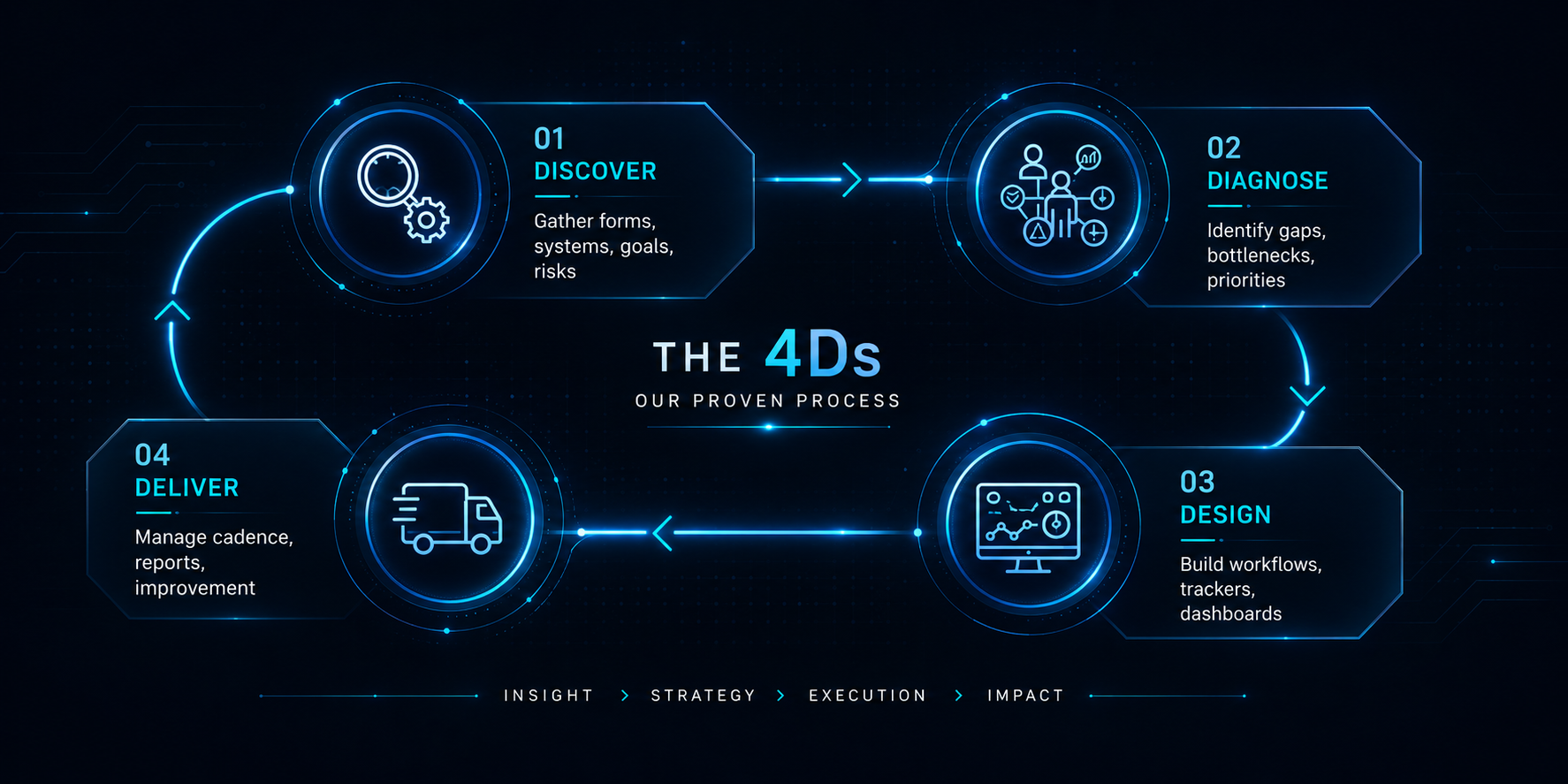
MMS uses a practical 4D framework to move from discovery to measurable operating change.
Discover
Review current systems, roles, workflows, reporting, billing process, technology, and leadership priorities.
Diagnose
Identify process waste, handoff breakdowns, system gaps, reporting weaknesses, revenue risk, and operational bottlenecks.
Design
Build the right workflows, dashboards, PMO tools, trackers, policies, reporting structures, and accountability rhythm.
Deliver
Implement the operating layer, monitor adoption, refine reporting, and support sustained execution.
Systems protect the proof.
When workflows, dashboards, reporting cadence, and accountability rhythm work together, leaders can make better decisions earlier.
What gets clarified
- Who owns each operational handoff
- What data belongs in the EHR, clearinghouse, payroll system, finance tool, dashboard, or tracker
- Which claims are clean, held, denied, aging, or awaiting action
- Which metrics belong in weekly leadership review
- Which deadlines create compliance, billing, or launch risk
What leadership gets
A disciplined operating cadence that surfaces risk, protects revenue, supports clean reporting, improves workflow accountability, and reduces avoidable administrative drag.
Built for the work that keeps healthcare companies functioning.
The primary focus is PMO, Lean diagnostics, system integration, dashboarding/reporting, and RCM, while still supporting the connected administrative functions that influence operational performance.
PMO and execution management
Project charters, launch plans, ownership tracking, issue logs, risk registers, decision logs, weekly leadership packets, and implementation cadence.
Lean Process Diagnostics
Workflow mapping, bottleneck identification, process waste reduction, handoff redesign, duplicate work reduction, and practical improvement roadmaps.
Multi-system integration
Custom workflow design across EHR, clearinghouse, billing, payroll, finance, credentialing, shared trackers, and executive reporting systems.
Dashboard buildout and reporting
Executive dashboards, KPI definitions, recurring reports, service-line views, operational scorecards, cash visibility, and exception-based reporting.
Revenue cycle management
Billing readiness, claim submission visibility, denial tracking, A/R aging, payment posting support, payer issue escalation, and cash-flow reporting.
EHR administration
User setup, templates, permissions, service-code workflows, queues, report pulls, and EHR workflow improvement for operational clarity.
Payroll and finance support
Payroll coordination, timecard review, contractor payment tracking, vendor calendars, recurring cash visibility, and payroll cost reporting.
Credentialing and roster tracking
Credentialing packet status, CAQH/NPI tracking, payer enrollment visibility, roster updates, and provider readiness monitoring.
Compliance administration
Due-date tracking, authorization expiration visibility, missing note reports, corrective action tracking, policy alignment, and audit-readiness support.
The cost of operational drag is measurable.
MMS uses healthcare operations benchmarks and published case-study ranges to estimate where time, cash, reporting clarity, and leadership attention may be lost inside fragmented administrative systems.
Designed to make growth less fragile.
MMS strengthens the infrastructure behind compliant service delivery by improving visibility, follow-through, financial discipline, system integration, and cross-company operating leverage.
Sharper execution
Projects, owners, risks, decisions, and deadlines stay visible.
Cleaner processes
Handoffs, rework, duplicate tracking, and bottlenecks are reduced.
Better reporting
Dashboards connect leadership questions to useful operational data.
Stronger revenue visibility
Claims, edits, denials, aging, and payer blockers surface earlier.
For operators who need structure, not just advice.
Growing behavioral health providers
Organizations with active services, payer requirements, documentation volume, staffing complexity, and billing risk that need stronger non-clinical infrastructure.
Multi-entity healthcare platforms
Parent companies, MSOs, or affiliated provider groups that need a shared operating rhythm across billing, payroll, credentialing, finance, compliance, and dashboards.
Teams launching service lines
Providers preparing for new payers, programs, contracts, locations, software workflows, or operating units that require launch discipline and readiness tracking.
Leaders under reporting pressure
Executives who need weekly clarity on what is happening, what is blocked, what needs action, and where financial or operational risk exists.
Flexible support based on scope, complexity, and operating need.
MMS can support targeted diagnostics, project-based buildouts, recurring operating support, or platform-level management services depending on the organization’s size and risk profile.
| Model | Best For | Typical Deliverables |
|---|---|---|
| Discovery and Diagnostic | Organizations that need to understand where operational risk, billing friction, process waste, or workflow gaps exist. | Service-line map, system review, Lean process findings, workflow findings, prioritized action plan, and recommended support scope. |
| Buildout Project | Teams standing up dashboards, reporting packets, billing trackers, process workflows, system handoffs, or new operating routines. | Project plan, templates, trackers, dashboards, SOP-style workflow guidance, reporting framework, and launch-readiness support. |
| Recurring Operating Support | Providers that need ongoing non-clinical infrastructure support and weekly operating visibility. | RCM support, dashboard packets, payer issue tracking, payroll/finance visibility, compliance administration, PMO cadence, and exception management. |
| Platform Management Services | Multi-entity healthcare platforms that need one operating layer across multiple provider entities. | Shared-service operating rhythm, cross-entity dashboards, launch trackers, risk registers, reporting standards, integration roadmap, and growth-readiness infrastructure. |
Clarity before buildout.
Does MMS provide clinical services?
Can MMS work across multiple systems?
What is the first step?
Build the operating layer before growth makes the cracks wider.
Schedule a discovery conversation to identify the systems, reports, workflows, dashboards, and accountability rhythms your organization needs next.